
2026 Six-Month State Estimates
As shown on the map, in the first half of 2026, motor-vehicle deaths decreased by 10% or more in 13 states:
- Hawaii (-30%, 20 fewer deaths)
- Illinois (-24%, 134 fewer deaths)
- West Virginia (-24%, 31 fewer deaths)
- Kansas (-21%, 39 fewer deaths)
- Oklahoma (-20%, 64 fewer deaths)
- Idaho (-18%, 22 fewer deaths)
- New Hampshire (-16%, 9 fewer deaths)
- Nevada (-14%, 28 fewer deaths)
- Maryland (-13%, 29 fewer deaths)
- Wisconsin (-13%, 33 fewer deaths)
- Tennessee (-12%, 62 fewer deaths)
- Utah (-11%, 13 fewer deaths)
- Massachusetts (-10%, 15 fewer deaths)
Ten states and the District of Columbia experienced increases of more than 10%:
- District of Columbia (+133%, 12 more deaths)
- Delaware (+24%, 11 more deaths)
- Rhode Island (+22%, 4 more deaths)
- Vermont (+18%, 4 more deaths)
- North Dakota (+18%, 7 more deaths)
- Kentucky (+18%, 49 more deaths)
- Alabama (+17%, 57 more deaths)
- Iowa (+16%, 19 more deaths)
- Wyoming (+14%, 7 more deaths)
- California (+14%, 178 more deaths)
- Mississippi (+12%, 30 more deaths)
For detailed state level estimates, select Data Table.
- Chart
- Data Table
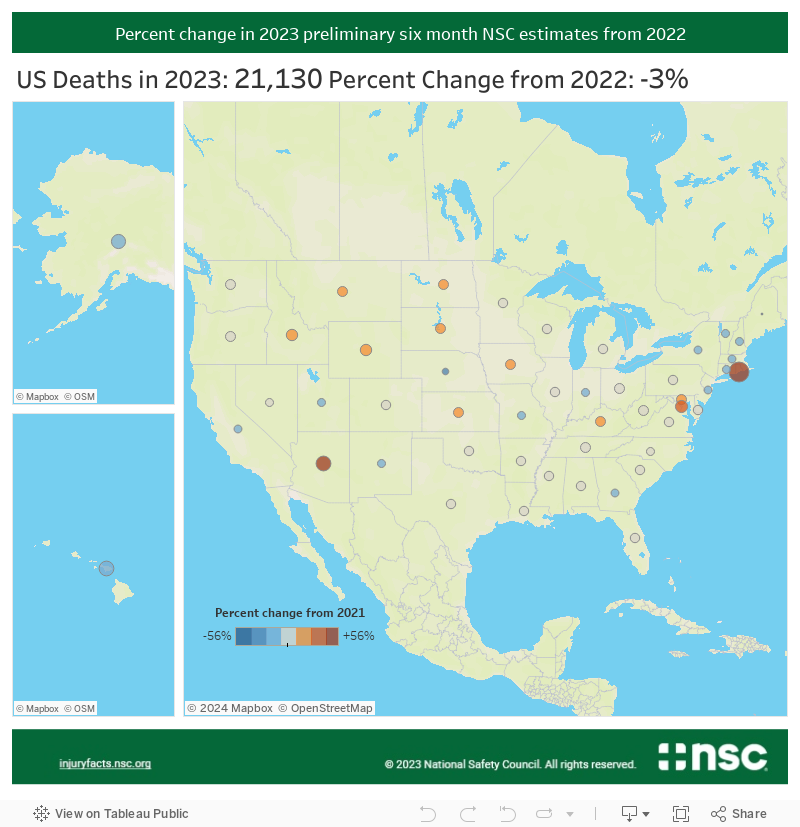
NSC preliminary motor-vehicle fatality estimates do not include U.S. territories.
How NSC Calculates Crash Fatality Estimates
NSC collects preliminary motor-vehicle fatality estimates from data reporters in all 50 states and the District of Columbia. State data reporters generally work in state Department of Transportation offices and are often the same individuals responsible for providing data to the National Highway Traffic Safety Administration’s (NHTSA) Fatality Analysis Reporting System (FARS).
Each month, state data reporters provide a first estimate for the previous month’s fatalities and updated estimates for all previously reported months.
NSC maintains a three-year database of all state motor-vehicle fatality estimate reports. Using January as an example, the NSC database includes the January estimate first reported in February, as well as any updated January estimates reported in March, April, May, June, July, August, September, October, November, and December.
Fatality estimates tend to mature over the course of the year. Numbers often increase as fatalities are confirmed. Because of the maturation of the data, NSC calculates year-to-year percent change estimates by comparing monthly motor-vehicle estimates of comparable maturity.
Percent change estimates are multiplied by the most recently available motor-vehicle fatality estimates reported by NCHS. Therefore, NSC estimates reflect the NCHS definition of motor-vehicle fatalities as both traffic and non-traffic deaths that occur within a year of the incident. Since NHTSA counts only traffic deaths that occur within 30 days of the incident, NSC national motor-vehicle fatality estimates are not comparable to NHTSA figures.
All state level data are displayed as reported by each state. All fatality estimates are preliminary. To ensure proper comparisons, 2025 state fatality estimates are preliminary figures covering the same reporting period as those for 2024. In other words, preliminary 2025 estimates are compared to preliminary 2024 and 2023 estimates, even if updated estimates are available.